Posts

Holiday Hope

Image
Contrary to some people’s expectation, this article will not be a jolly, ho-ho-holiday read, despite it having both "holiday" and "hope" in its title. It will be about the reality of how a lot of people perceive holidays and their life in general, and about a possible alternative to that. As some of you may or may not have observed, many people live a lost, confusing, unconscious, and unhappy life. One of the manifestations of this phenomenon is that they live from one event or happening to another. Halloween is coming! I better get those decorations and candy ready! Aaaand it’s gone—but Christmas is next! Family time, gifts, Jesus, and songs! Aaaand it’s gone—but New Year is next! Aaaand it’s gone—but my birthday is next! Your friend John’s birthday; a new Star Wars movie, a new Fallout video game; NBA playoffs; Black Friday, a new episode of Game of Thrones, a weekend, etc. Don’t get me wrong, it’s wonderful to feel excited, and some of those things can provide ...

On Freud's Theory of Oedipus Complex

Image
The following text is a quote from Lundy Bancroft's book "Why Does He Do That?" In the 1890s, when Freud was in the dawn of his career, he was struck by how many of his female patients were revealing childhood incest victimization to him. Freud concluded that child sexual abuse was one of the major causes of emotional disturbances in adult women and wrote a brilliant and humane paper called “The Aetiology of Hysteria.” However, rather than receiving acclaim from his colleagues for his ground-breaking insights, Freud met with scorn. He was ridiculed for believing that men of excellent reputation (most of his patients came from upstanding homes) could be perpetrators of incest. Within a few years, Freud buckled under this heavy pressure and recanted his conclusions. In their place he proposed the “Oedipus complex,” which became the foundation of modern psychology. According to this theory any young girl actually desires sexual contact with her father, because she want...

Update on My Life

Image
Hi everybody, it’s been a while! This blog post will be a little different. As some of you have noticed, there haven’t been many blog posts in the last year or so. I’ve posted some videos on the Self-Archeology YouTube channel , but some of them are directed to a slightly more general audience; meanwhile the blog posts are more complex and dig deeper. During this time of my literary stillness, I’ve received several messages saying they find this blog really informative and valuable, and they want to know if I will continue writing. The truth is, I was quite preoccupied with a big project that is a book I plan on self-publishing in a digital form later this year. I didn’t want to announce it earlier because it’s quite a huge project for me. I’m working on it on and off for about a year now, so there are not much resources left for this blog. Because when I feel like writing, I work on the book—and when I’m not doing that, I’m either working with my clients or relaxing. I feel more...

D. Mackler and M. Morrissey "Understanding Your Role in the Family"

Image
The following text is from the book "A Way Out of Madness" by Daniel Mackler and Matthew Morrissey. Chapter 4 Understanding Your Role in the Family We all grow up playing roles in our families, and more intensely and rigidly so in more troubled families. Family roles and family dynamics are generally unspoken and unconscious, especially in families with a higher degree of conflict. Sometimes these roles can be somewhat healthy and prepare us for a strong, independent adult life. Yet other times they can literally cripple us. Understanding your own historical role or roles in your family offers you the key to make more informed choices about your present life, to modify the way you interact with the world, and ultimately to unfold your life and your future. As the saying goes, “The truth will set you free.” Some family therapists even go so far as to see psychiatric disorders as an expression or a facet of troubled family dynamics. They share the observation t...

Alice Miller "The Newly Recognized, Shattering Effects of Child Abuse"

Image
The following text is from Alice Miller's book "The Untouched Key." For some years now there has been proof that the devastating effects of the traumatization of children take their inevitable toll on society. This knowledge concerns every single one of us, and—if disseminated widely enough—should lead to fundamental changes in society, above all to a halt in the blind escalation of violence. The following points are intended to amplify my meaning: 1. All children are born to grow, to develop, to live, to love, and to articulate their needs and feelings for their self-protection. 2. For their development children need the respect and protection of adults who take them seriously, love them, and honestly help them to become oriented in the world. 3. When these vital needs are frustrated and children are instead abused for the sake of adults' needs by being exploited, beaten, punished, taken advantage of, manipulated, neglected, or deceived without the interv...

Setting Boundaries with Toxic People (Part 2): Learned Dependency

Image
In the previous blog post I’ve talked about the learned confusion that comes up when one is trying to set personal boundaries. In this article I will talk about another aspect of the boundaries-related struggles many people have difficulties with: learned dependency. (I recommend to read part one first.) People who have been raised in a controlling environment, i.e., the vast majority of us, often have an incorrect perception of themselves ( self-esteem issues), which leads to an inability to accurately perceive others and have healthy relationships). Children who are not allowed to be themselves – to feel, to think, to have needs, preferences, interests, and healthy boundaries – learn that: Their emotions and thoughts are incorrect (self-trust and self-worth issues, confusion, self-doubt, destructive and/or self-destructive behavior). Their needs, preferences, and interests are less important than others’ (people pleasing, social anxiety, social fears, “shyness,” passivity, ch...

Setting Boundaries with Toxic People (Part 1): Self-Doubt

Image
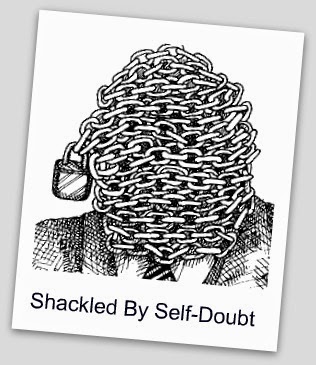
Recently I’ve written about the difficulties of being raised in a controlling environment and about how controllers try to drag others down and manipulate others through guilt and shame . (If you want to get more value out of this post, I recommend reading those articles first.) When we become aware of the truth about the real dynamics of a toxic relationship we participate in, we, for obvious reasons, may decide to stand up for ourselves and break away from it. However, more often than not this is a highly difficult process. It’s easier if it’s a random person on the street, but much harder if it’s our toxic mother, father, grandmother, grandfather, brother, sister, aunt, uncle, spouse, boyfriend, girlfriend, friend, or acquaintance. If an unknown person comes up to us on the street and hits us in the face, we don't feel that such a situation is a dilemma wrapped in a conundrum. We don’t feel bad for feeling angry, upset, hurt and wanting to get away from this person. The...