Posts

Showing posts with the label repetition compulsion

Narcissism (Part 2): Narcissism and Self-Esteem

Image
To understand this article better, it is highly recommended to read the previous one titled Narcissism: What It Is and Isn’t . The Role of Self-Esteem in Narcissist’s Self-Image One of the biggest misconceptions about narcissistic people is that the narcissistic person has a high self-esteem. It’s an easy mistake: some of them look fancy, have money, know how to get what they want, are respected, famous, powerful, and so on. In actuality though, they have low self-esteem. It only seems like they have a high self-esteem because they associate themselves with things that they perceive as having status or they pretend and imitate those who actually have high, healthy self-esteem. All of this gives them narcissistic supply from others and boosts their false sense of self-worth. Since a narcissist’s sense of self-esteem comes from other people’s perception of them, and since they see themselves as both not enough and perfect (depending on the situation), their main drive is to mana...

Q&A: Why Do I Become Increasingly Anxious around People the Longer I Know Them?

Image
QUESTION The longer I know someone, the more anxious I feel around them. Why is that? ANSWER It is hard to say for sure without knowing a person’s history and the particular situation they are in. Based on my personal and professional experience, someone who feels increasingly anxious around others is afraid of the relationship becoming more close and more intimate. Not necessarily in a romantic or sexual way (although it can definitely be that, too), but just knowing each other better, being more vulnerable, and so on. Now why is that? Generally, I see two cases: one , the person is afraid of building an intimate, caring, loving bond with someone, and two , they are scared of others exploiting and deliberately hurting them. Sometimes it is a combination of both. In the first scenario , the person is not used to healthy intimacy and has trust issues. They may not know how to have mutual respect, reciprocity, and power equality—or even what it looks like. They also may not kno...

"I Yell at My Children, and They Will Turn out Fine!"

Image
This article is a response to an old, yet very pertinent comment regarding childhood trauma and its effects. About three years ago, I wrote an article called Child Abuse and Its Results in Today's Society . Some time after, a person named Lisa left this public comment: I didn't publish it at the time for relatively obvious reasons, and then completely forgot about it. But yesterday I was looking at all the unapproved comments, saw it, and thought it could be useful to comment on it. This is a rhetorical response only; I'm not actually addressing Lisa personally. I've met and observed many people who say and do similar things, and who have a similar personality and communication methods. I'm simply using this comment as a background context—an example, or a vehicle, if you will—to talk about a bigger, highly common issue that is childhood trauma. Now, disclaimer aside, let's get to it. Not that I do not agree with any of this, but as a parent (and someone ...

Self-Archeological Conversations #3: Black & White Thinking - Podcast

Image
In this episode of Self-Archeological Conversations, Darius and Jackie talk about black and white thinking, its origins, and how it manifests in one's personal and social life. The hosts explore how this psychological phenomenon is related to family roles, to repetition compulsion, and to projection in one's adult life. It is also examined how it is connected to idealization or vilification of perceived heroes, idols, celebrities, enthusiasts, and helpers, to individualism versus tribalism, and to a general lack of a healthier perspective.

Silencing the Voice of Reason (Part 2): Values, Principles, and Lack Thereof

Image
In the first part , I talked about many people’s tendency to silence the voice of reason—in themselves and in others—and the psychological mechanisms behind it. Here, I will talk about principled versus unprincipled thinking and its consequences. To be able to conceptualize reality accurately, a person has to have rational, clear, sound, and consistent principles and values. Failure to do so leads to, among other things, confusion and delusion. One would think that a human being would want to aim to be as principled and virtuous as possible. Ideally, yes. However, if a person’s true feelings, thoughts, and experiences are silenced from childhood, they don’t learn to have rational principles (as talked about in part one), because it’s actually dangerous to have principles and integrity when you are small and dependent. This deep fear usually carries out into one’s adulthood, so a person, who is now an adult, is trained not to have principles and to have a strong reaction to a voice of...

Silencing the Voice of Reason (Part 1): The Origins and The Mechanism

Image
“Don't conceptualize reality as it is!” In this series of articles, I will talk about people’s avoidance of reality, and about personal and social outrage when encountering a voice of reason. In the first part that is this article, I will explain the origins of a person’s unreasonable reaction to describing reality and the mechanism behind this phenomenon. I will also talk about the social outcomes of openly describing the unpleasant aspects of reality, especially child mistreatment. All of us have probably been in a situation where we saw something and we’ve tried to describe or address it, but we were quickly shut down or realized it is not allowed to do so. If all of our memories were accessible to our conscious mind, most likely we would see that it started very early. Children are born rational and smart, in a sense that initially they try to experience and describe reality as it is. Sadly, in childhood and adolescence many of us are not allowed to describe reality corr...

Self-Archeological Conversations #2: Hope, Passivity, (Self-)Responsibility, Boundaries - Podcast

Image
The second episode of our podcast is here! In it, I and my co-host Jackie talk about the concepts of hope, passivity (self-)responsibility, boundaries, and more. Get cozy and join us for an hour of self-archeology.

Holiday Hope

Image
Contrary to some people’s expectation, this article will not be a jolly, ho-ho-holiday read, despite it having both "holiday" and "hope" in its title. It will be about the reality of how a lot of people perceive holidays and their life in general, and about a possible alternative to that. As some of you may or may not have observed, many people live a lost, confusing, unconscious, and unhappy life. One of the manifestations of this phenomenon is that they live from one event or happening to another. Halloween is coming! I better get those decorations and candy ready! Aaaand it’s gone—but Christmas is next! Family time, gifts, Jesus, and songs! Aaaand it’s gone—but New Year is next! Aaaand it’s gone—but my birthday is next! Your friend John’s birthday; a new Star Wars movie, a new Fallout video game; NBA playoffs; Black Friday, a new episode of Game of Thrones, a weekend, etc. Don’t get me wrong, it’s wonderful to feel excited, and some of those things can provide ...

Setting Boundaries with Toxic People (Part 2): Learned Dependency

Image
In the previous blog post I’ve talked about the learned confusion that comes up when one is trying to set personal boundaries. In this article I will talk about another aspect of the boundaries-related struggles many people have difficulties with: learned dependency. (I recommend to read part one first.) People who have been raised in a controlling environment, i.e., the vast majority of us, often have an incorrect perception of themselves ( self-esteem issues), which leads to an inability to accurately perceive others and have healthy relationships). Children who are not allowed to be themselves – to feel, to think, to have needs, preferences, interests, and healthy boundaries – learn that: Their emotions and thoughts are incorrect (self-trust and self-worth issues, confusion, self-doubt, destructive and/or self-destructive behavior). Their needs, preferences, and interests are less important than others’ (people pleasing, social anxiety, social fears, “shyness,” passivity, ch...

Setting Boundaries with Toxic People (Part 1): Self-Doubt

Image
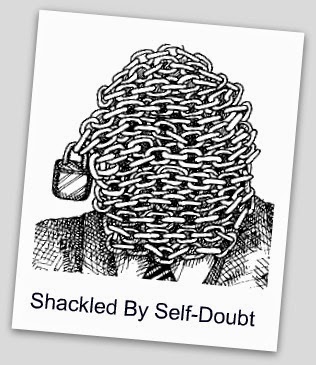
Recently I’ve written about the difficulties of being raised in a controlling environment and about how controllers try to drag others down and manipulate others through guilt and shame . (If you want to get more value out of this post, I recommend reading those articles first.) When we become aware of the truth about the real dynamics of a toxic relationship we participate in, we, for obvious reasons, may decide to stand up for ourselves and break away from it. However, more often than not this is a highly difficult process. It’s easier if it’s a random person on the street, but much harder if it’s our toxic mother, father, grandmother, grandfather, brother, sister, aunt, uncle, spouse, boyfriend, girlfriend, friend, or acquaintance. If an unknown person comes up to us on the street and hits us in the face, we don't feel that such a situation is a dilemma wrapped in a conundrum. We don’t feel bad for feeling angry, upset, hurt and wanting to get away from this person. The...

Being Controlled by Shame and Guilt

Image
In the last article I’ve talked about one of the mechanisms controllers use to manipulate people that is dragging others down . Another one is the attempt to trigger feelings of unjust shame and guilt in the person they want to control and manipulate.  If you have grown up in a controlling environment , the chances are high you are very familiar with this phenomenon, and you may be prone to it today or even use this mechanism on others yourself. How does it work? When you are a small child, you need your parents’ acceptance to survive in this world. A child needs to feel that their primary caregiver accepts them, cares for them, and approves of their existence. If a parent says to a child – explicitly or implicitly – that the child is bad or somehow defective, the child feels shame and guilt, and at a fundamental level sees it as a risk to their bond with their caregiver (which means there is a potential threat to your survival and well-being). Also, because a child needs their...

Dragging Others Down

Image
At one time or another, probably we all have interacted with people who try to demotivate you, extinguish your enthusiasm, scare you, and drag you down. For the sake of simplicity, let's call them Down-Draggers . A Down-Dragger is a person who constantly tells you that you better not do this or that because you will fail, something bad will happen, you will harm yourself, it's not in your best interest, it's too much of a risk, you will regret it afterwards, your accomplishments don't matter, you are not ready, you are not strong enough, you're not good enough, and so on, and so on, and so on. By the way, I'm not talking about constructive feedback and genuine care for another person. I'm talking about fear mongering, lack of curiosity, manipulation, acting out your own unpleasant, unprocessed feelings and insecurities, and trying to meet your own narcissistic needs by attempting to control another person.   The psychological mechanism of dragging others...

The Burden of Being Over-Controlled as a Child

Image
If you as a child have had an over-controlling parent or other authority figure, the chances are you have developed some personality traits and psychological patterns that make your life more or less difficult. Over-controlling parents watch a child’s every move, tell them what to do, seek domination, constantly criticize them, teach unhealthy boundaries, have unrealistic or impossible standards and expectations for them, and use active or passive abuse to manipulate them and make them comply. It’s hard to breathe around such a parent – both mentally and sometimes even physically. A child who grows up in such an environment often becomes a neurotic adult. Because they were under a magnifying glass for so many years, they have learned to adapt and monitor themselves. What was external, at some point got internalized, and such a person learned to treat themselves as their caregivers treated them. Hence now, as adults, they feel the “need” for constant vigilance and self-monitoring. T...

Alice Miller on Trauma, Repression, Masochism, Repetition Compulsion, and Therapeutic Work

Image
The following text is from Alice Miller's book "Banished Knowledge." As time went on it became clear to me that the idea of children inventing traumas is absurd. Anyone is free to check on the natural law that human beings will avoid pain rather than seek it. They seek pleasure, joy, reassurance. Masochism is no exception to this rule: It is a compulsion to inflict new suffering on oneself to keep former suffering repressed. The masochist who at great expense has himself whipped by a prostitute and insists on sitting on a chamber pot during the procedure is obeying a compulsion to reproduce the trauma of his toilet training and to keep the memory repressed at all costs. Another law of life is that the idealization of the parents with the aid of fantasy and repression helps the child to survive; thus to attribute bad things to one's nearest and dearest would run counter to natural defenses and the law of life. It follows that a child will never invent traumas . On ...