Posts

Showing posts with the label guilt

"I Yell at My Children, and They Will Turn out Fine!"

Image
This article is a response to an old, yet very pertinent comment regarding childhood trauma and its effects. About three years ago, I wrote an article called Child Abuse and Its Results in Today's Society . Some time after, a person named Lisa left this public comment: I didn't publish it at the time for relatively obvious reasons, and then completely forgot about it. But yesterday I was looking at all the unapproved comments, saw it, and thought it could be useful to comment on it. This is a rhetorical response only; I'm not actually addressing Lisa personally. I've met and observed many people who say and do similar things, and who have a similar personality and communication methods. I'm simply using this comment as a background context—an example, or a vehicle, if you will—to talk about a bigger, highly common issue that is childhood trauma. Now, disclaimer aside, let's get to it. Not that I do not agree with any of this, but as a parent (and someone ...

On Freud's Theory of Oedipus Complex

Image
The following text is a quote from Lundy Bancroft's book "Why Does He Do That?" In the 1890s, when Freud was in the dawn of his career, he was struck by how many of his female patients were revealing childhood incest victimization to him. Freud concluded that child sexual abuse was one of the major causes of emotional disturbances in adult women and wrote a brilliant and humane paper called “The Aetiology of Hysteria.” However, rather than receiving acclaim from his colleagues for his ground-breaking insights, Freud met with scorn. He was ridiculed for believing that men of excellent reputation (most of his patients came from upstanding homes) could be perpetrators of incest. Within a few years, Freud buckled under this heavy pressure and recanted his conclusions. In their place he proposed the “Oedipus complex,” which became the foundation of modern psychology. According to this theory any young girl actually desires sexual contact with her father, because she want...

Setting Boundaries with Toxic People (Part 2): Learned Dependency

Image
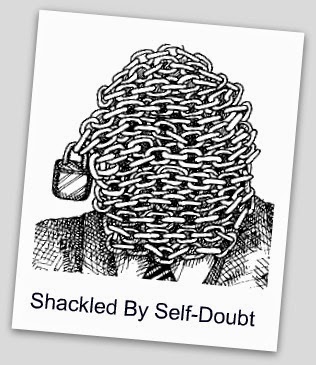
In the previous blog post I’ve talked about the learned confusion that comes up when one is trying to set personal boundaries. In this article I will talk about another aspect of the boundaries-related struggles many people have difficulties with: learned dependency. (I recommend to read part one first.) People who have been raised in a controlling environment, i.e., the vast majority of us, often have an incorrect perception of themselves ( self-esteem issues), which leads to an inability to accurately perceive others and have healthy relationships). Children who are not allowed to be themselves – to feel, to think, to have needs, preferences, interests, and healthy boundaries – learn that: Their emotions and thoughts are incorrect (self-trust and self-worth issues, confusion, self-doubt, destructive and/or self-destructive behavior). Their needs, preferences, and interests are less important than others’ (people pleasing, social anxiety, social fears, “shyness,” passivity, ch...

Setting Boundaries with Toxic People (Part 1): Self-Doubt

Image
Recently I’ve written about the difficulties of being raised in a controlling environment and about how controllers try to drag others down and manipulate others through guilt and shame . (If you want to get more value out of this post, I recommend reading those articles first.) When we become aware of the truth about the real dynamics of a toxic relationship we participate in, we, for obvious reasons, may decide to stand up for ourselves and break away from it. However, more often than not this is a highly difficult process. It’s easier if it’s a random person on the street, but much harder if it’s our toxic mother, father, grandmother, grandfather, brother, sister, aunt, uncle, spouse, boyfriend, girlfriend, friend, or acquaintance. If an unknown person comes up to us on the street and hits us in the face, we don't feel that such a situation is a dilemma wrapped in a conundrum. We don’t feel bad for feeling angry, upset, hurt and wanting to get away from this person. The...

Being Controlled by Shame and Guilt

Image
In the last article I’ve talked about one of the mechanisms controllers use to manipulate people that is dragging others down . Another one is the attempt to trigger feelings of unjust shame and guilt in the person they want to control and manipulate.  If you have grown up in a controlling environment , the chances are high you are very familiar with this phenomenon, and you may be prone to it today or even use this mechanism on others yourself. How does it work? When you are a small child, you need your parents’ acceptance to survive in this world. A child needs to feel that their primary caregiver accepts them, cares for them, and approves of their existence. If a parent says to a child – explicitly or implicitly – that the child is bad or somehow defective, the child feels shame and guilt, and at a fundamental level sees it as a risk to their bond with their caregiver (which means there is a potential threat to your survival and well-being). Also, because a child needs their...