Posts

Showing posts with the label self-doubt

The Trap of External Validation for Self-Esteem

Image
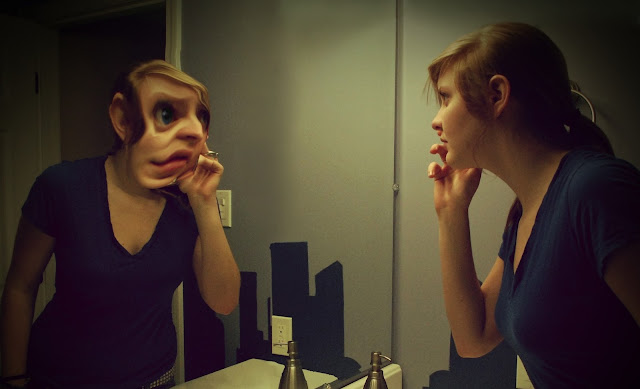
In my personal and professional life, I have met and observed many people who are desperately trying to get approval and acceptance from others, never feeling enough, and being terrified of many forms of social rejection.  For many, hurt and invalidation starts very early and routinely continues throughout their life in one form or another. As a result, so many people learn that a sense of self-esteem and self-worth fundamentally comes not from within but from others, therefore they constantly seek other’s people’s approval or attention.  The Mechanism Behind It When you are a small child whose whole existence and well-being depends on others, it is vital not to feel rejected because for a child rejection equals existential death. And since as children we are constantly hurt and rejected in many overt and highly subtle ways, a lot of us grow up into wounded and self-less adults whose self-perception is skewed or blurry, to the degree to which we haven’t resolved it. If we neve...

Seeking Validation from the Wrong People Is Self-Destructive

Image
Validation for Healing and Personal Growth People who have been abused, mistreated, hurt, or wronged in any other way almost universally seek validation. We talk to others, tell our stories, write about it, and express it in other ways.  Even perpetrators do it because, in their mind, they are the ones being wronged even though they are the ones harming others—but that’s a separate topic. Here, we will only talk about people who were actually wronged and who tend to avoid scenarios that resemble how a perpetrator seeks validation or actually receives enabling.  Everyone in their own mind wants to make sense out of their painful experiences and be validated that they are right. A commonly used way is to talk about it with others. The most productive scenario is probably to seek professional help, assuming that you can find a competent enough helper, be it a therapist, life coach, counselor, social worker, etc. But, depending on the situation, sometimes friends, family, or even ...

After Childhood: From False Beliefs to Wholeness

Image
Many people who have been actively or passively hurt as children often ponder the perpetrator’s motives and reasons behind it. “Why did you hit me when I was so helpless and vulnerable?” “Why didn’t you want to spend more time with me?” “Why didn’t you treat me like a person?” “Why did you demean and belittle me instead of encouraging and helping me?” “Why did you yell at me so much?” “Why didn’t you care that I was hurt?” “Why did you leave me alone with my troubles when I felt so overwhelmed and lonely?” “Why weren’t you a decent role model for me?” “Why did you disregard my feelings, wants, and preferences?” “Why didn’t you care more?” “Why didn’t you love me?” Children look for explanations of these things in order to make sense of it. Since putting responsibility on one’s caregivers is usually not allowed, the child internalizes it. Moreover, children are often explicitly blamed for being abused. And so “the explanation” involves self-blame, and results i...

On Feeling Disconnected and Lost after Entering Adulthood

Image
Over the years, I have encountered, observed, and professionally worked with many people who come from difficult childhood environments . One common feature that these people, and the vast majority of people, have after becoming adults is feeling empty, lacking, and lost. Many of us enter adulthood hurt, deprived, misled, lonely, anxious, tired, angry, numb, bored, or terrified. When a person grows up, leaves their childhood home, and “becomes an adult,” it is common for them to feel totally lost and disconnected. They don’t know who they are, what they like, how they feel, where to go, and what to do about it. Now why do so many people feel this way? If, as a child, it is forbidden to be yourself, and if your true self is met with violence, rejection, scorn , or invalidation, then you learn to hide it. This is necessary to your survival in an otherwise problematic or dangerous environment. And so you repress your feelings, you hide your thoughts, you abandon your interests, a...

On The Difficulties of Identifying Narcissistic, Unhealthy, Toxic, Dangerous People

Image
Recently, I posted a picture on the Self-Archeology Facebook page that says the following: "Narcissists literally have two faces—their real face and their stage face. And neither is anything like the other. Which one you see will depend on how long you’ve known them. Narcissists can be very charming and know how to gain favor. Anyone who doesn’t know a narcissist well will tell you the narcissist is one of the greatest people they’ve ever met! They believe this is one of the most intelligent, kindest, most interesting, funny, agreeable, most attractive, talented or accomplished people ever. They may wish they themselves had it so "together" or were so popular. However, anyone who knows that same narcissist better (family members, longtime coworkers, etc.) will tell you the narcissist is one of the most horribly frustrating and toxic people they know, and the mere mention of their name makes them feel uneasy, angry, frustrated or otherwise unhappy. Being the only one wh...

Healing Starts Where (Self-)Connection Begins

Image
Practice listening to yourself and meaning-making. This is a quick article on the topic of self-connection. Here, I will talk about the importance of self-connection, the origins and difficulties of (self-)disconnection, and the cultivation of self-validation and individuality. The Origins and Results of Disconnection When we are children, we often are invalidated, mistreated, rejected, frightened, manipulated, confused, and abused in a thousand other ways. To avoid all of that and survive in our toxic and dangerous environment, we learn to adapt to it by disconnecting from it—and, fundamentally, from ourselves. Then we grow up, and those survival and defense mechanisms carry into our adulthood and manifest themselves in the same or similar forms. Except now, being in a completely different habitat, they are not protecting us but hinder our growth and lead to numerous problematic, even unhealthy situations, behaviors, and moods. Being disconnected from yourself leads to realit...

Q&A: Is Therapy Working for Me?

Image
This article is the second entry in my Q&A series, where I answer a question or respond to a comment. If you missed the previous article, you can find it here: “Should I Talk to My Parents About My Childhood Hurts?” Question Today’s question is extremely popular: I’m in therapy, and some people [my spouse, or parent, or friend, or coworker, or partner] say that it’s not working for me. I’m confused. Is it true? Answer Although it can be nuanced, generally there are only two possibilities: it’s either true or false. Everyone’s situation is different, so you need some objective criteria to be able to figure out your own case. First, it’s worth noting that the vast majority of people working in the mental health and helping field are not very good at their job, and not necessarily out of malevolence. They themselves are highly unresolved, lack true skill and actual knowledge (formal “education” is barely anything), and sometimes are even more traumatized than their clients. S...

Q&A: Should I Talk to My Parents About My Childhood Hurts?

Image
This is the first entry in the new series, "Self-Archeology Q&A," where I answer a question or respond to a comment. The first question I want to tackle today is a very common one. I’ve gotten this question from a substantial amount of people, and I have observed many struggling with it, so I will share my thoughts on it in a form of a structured article in hope that it will be useful to more people. Question: Should I, as an adult, talk to my caregiver* about my hurtful and otherwise problematic childhood experiences? Answer: First, it is worth noting that the question itself is formulated incorrectly—not from a grammatical but from a psychological perspective. The word 'should,' by definition, indicates an obligation, a lack of choice. You are not obligated to talk to your caregivers about anything, nor you are forced to do so. You can if you want to —but there is no should here. I’m not going to talk about the argument why this is the case in great de...

Silencing the Voice of Reason (Part 3): The Pros and Cons of Speaking the Truth

Image
It is highly recommended to read Part 1 and Part 2 before reading the following. We’ve already established why and how disconnected people react when in confrontation with reality, and that in order to remain in denial and disconnection one has to ignore trauma and silence reason—that of other people and in themselves. Here, I will talk about the personal and social effects of being a voice of reason. There are both negative and positive consequences related to being a voice of reason in our society. The negatives: 1. Social outrage. If you decide to be principled and to have high integrity, you see that most people don’t objectively see reality. If you share your insight and stand up for what is objectively right, some of those people will get upset and try to silence you. Remember, in their eyes, the problem is not the horrors and injustices of reality that you are describing, but rather the problem is YOU describing it because you are challenging their denial and delusio...

Self-Archeological Conversations #2: Hope, Passivity, (Self-)Responsibility, Boundaries - Podcast

Image
The second episode of our podcast is here! In it, I and my co-host Jackie talk about the concepts of hope, passivity (self-)responsibility, boundaries, and more. Get cozy and join us for an hour of self-archeology.

Holiday Hope

Image
Contrary to some people’s expectation, this article will not be a jolly, ho-ho-holiday read, despite it having both "holiday" and "hope" in its title. It will be about the reality of how a lot of people perceive holidays and their life in general, and about a possible alternative to that. As some of you may or may not have observed, many people live a lost, confusing, unconscious, and unhappy life. One of the manifestations of this phenomenon is that they live from one event or happening to another. Halloween is coming! I better get those decorations and candy ready! Aaaand it’s gone—but Christmas is next! Family time, gifts, Jesus, and songs! Aaaand it’s gone—but New Year is next! Aaaand it’s gone—but my birthday is next! Your friend John’s birthday; a new Star Wars movie, a new Fallout video game; NBA playoffs; Black Friday, a new episode of Game of Thrones, a weekend, etc. Don’t get me wrong, it’s wonderful to feel excited, and some of those things can provide ...

On Freud's Theory of Oedipus Complex

Image
The following text is a quote from Lundy Bancroft's book "Why Does He Do That?" In the 1890s, when Freud was in the dawn of his career, he was struck by how many of his female patients were revealing childhood incest victimization to him. Freud concluded that child sexual abuse was one of the major causes of emotional disturbances in adult women and wrote a brilliant and humane paper called “The Aetiology of Hysteria.” However, rather than receiving acclaim from his colleagues for his ground-breaking insights, Freud met with scorn. He was ridiculed for believing that men of excellent reputation (most of his patients came from upstanding homes) could be perpetrators of incest. Within a few years, Freud buckled under this heavy pressure and recanted his conclusions. In their place he proposed the “Oedipus complex,” which became the foundation of modern psychology. According to this theory any young girl actually desires sexual contact with her father, because she want...

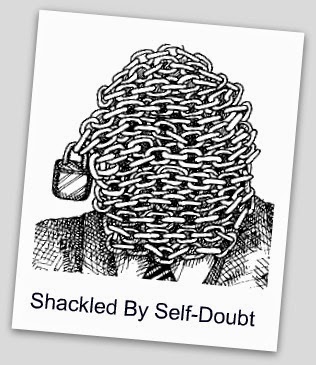
Setting Boundaries with Toxic People (Part 1): Self-Doubt

Image
Recently I’ve written about the difficulties of being raised in a controlling environment and about how controllers try to drag others down and manipulate others through guilt and shame . (If you want to get more value out of this post, I recommend reading those articles first.) When we become aware of the truth about the real dynamics of a toxic relationship we participate in, we, for obvious reasons, may decide to stand up for ourselves and break away from it. However, more often than not this is a highly difficult process. It’s easier if it’s a random person on the street, but much harder if it’s our toxic mother, father, grandmother, grandfather, brother, sister, aunt, uncle, spouse, boyfriend, girlfriend, friend, or acquaintance. If an unknown person comes up to us on the street and hits us in the face, we don't feel that such a situation is a dilemma wrapped in a conundrum. We don’t feel bad for feeling angry, upset, hurt and wanting to get away from this person. The...